Q: Do you provide Telehealth services or In-Office services or both?
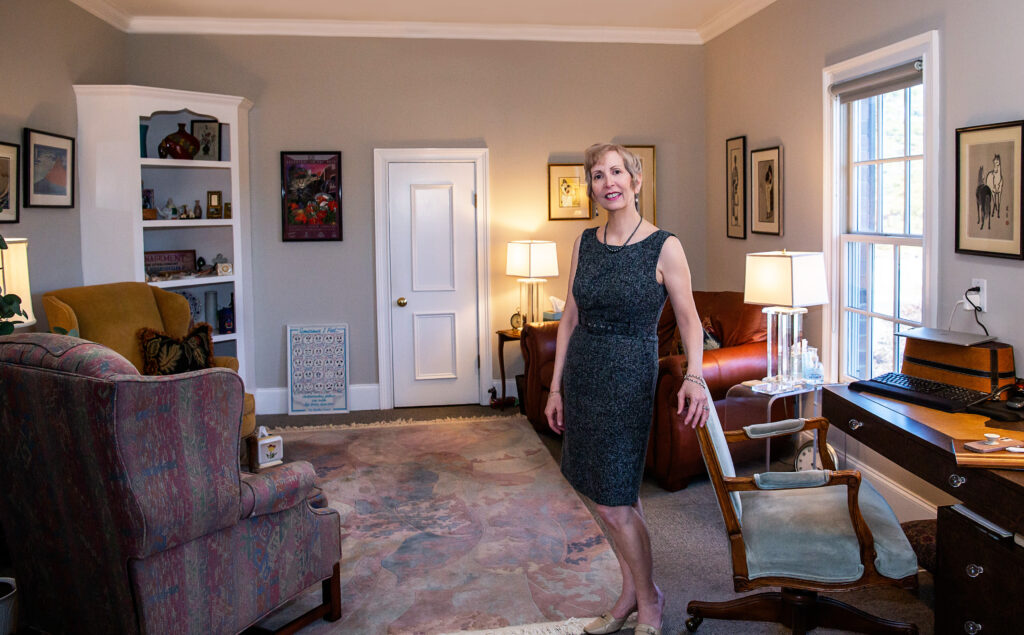
A: I provide In-Office services in Charlotte, North Carolina and telehealth to those outside of the greater Charlotte area, including most states.
Q: How do I know if I need therapy; is there really even a problem here?
A: In most cases, if the problem has reached the point where you are considering psychotherapy, or your life is being disrupted by unwanted symptoms, then this is probably a good time to get some help.
Q: Can you help me with my kind of problem?
A: I can help with a wide variety of problems. I have deep and broad education, training and experience. If your therapy needs fall outside my area of expertise, I will help you find a provider.
Q: What if I know something is not right, but I do not know what it is?
A: This is where my exploratory approach and my experience helps. We will look together to see what is happening with you and explore what you wish to change.
Q: How will I know if you are the right therapist for me?
A: You will know that I am the right provider for you if you believe that I am listening well, am focused, have warmth, have an understanding of the problem and of your stated objectives, that I am addressing the important points, that you are learning about yourself, and that you are feeling better. Most people in my practice feel not just a little better, but, over time, considerably better.
Q: What is the difference between a psychologist and a counselor or social worker?
A: What sets doctoral psychologists apart is the breadth and depth of training. The six years of full-time training (after college) includes coursework, practica (supervised work) and internship. Coursework is in assessment and diagnosis, attachment, development through the life-span, personality styles and personality disorders, normal and abnormal psychology, and analysis of research on treatment effectiveness. The training I have provides a reliable, evidence-based foundation in scientific theory, research, assessment, and treatment of most psychological problems.
Q: What happens in the first session?
A: After we complete consent for treatment, we will talk about what is on your mind and heart, what is troubling you in your life, and what you are hoping to get from your therapy process. I want to get a good idea of what your hopes and expectations are for your therapy. I also want to make sure you get your questions answered. In this session, the main goal is for us to see if we agree that we are a good fit to work together.
Q: What if I have already tried therapy ?
A: Having been in therapy before is very helpful to the process. I will want to learn what you found helpful and in what ways, if any, that therapy was not helpful.
Q: Who do you work with and who do you not work with?
A: I work with adults (and kids if it is about grief).
I have opted out of Medicare. If you are 65 or older and are on Medicare, you would use private pay and would agree not to file a claim to Medicare.
I do not conduct formal testing/assessment for school or court or for medication purposes.
I do not conduct marital / couples therapy or family therapy.
I do not work with actively using alcoholics or substance abusing individuals.
Q: What is Gestalt Therapy?
A: Gestalt therapy is in the grouping of Somatic therapy, a body-based approach. It uses an here-and-now awareness of body sensations, perception, movement, and awareness of self in relation to other, to increase awareness of needs, wishes, and emotions. It is a powerful means of releasing stress and trauma. Gestalt therapy is exhilarating and freeing!
Q: What is Sand Tray Therapy and Why Do You Use It?
A: Sand Tray Therapy is an expressive arts therapy form in which clients use miniature figures to create a scene in the sand tray, which serves as a structured container. The inner world of the client is depicted in pictorial story-telling. It is particularly effective at helping people access complex feelings, connect with themselves, express themselves without words, and process trauma.
Q: Do you provide Christian Counseling?
A: Yes, I provide Christian Counseling, if you want it. If your faith is a strength for you, let’s discuss how you want to integrate it into your treatment. If you are coming from another faith tradition or none at all, I will meet you where you are.
Q: Don’t you get tired of listening to people’s problems?
A: No. Each person’s story is unique and compelling. I feel privileged and am honored that people trust me with their thoughts and feelings.
Q: Yes, but don’t you get burned out?
A: It takes a lot of work and dedication to do my self-care and prevent burnout. Proper sleep and rest, exercise, social life, spiritual life, hobbies/fun, continuing education/training, peer consultation, and my personal therapy are necessary pieces in my self care. That’s how I keep the FUN in dysFUNctional!
Q: How long is this going to take?
A: It takes a few sessions for me to get to know you, your problems and your strengths, in order to gauge how long your process might take. Much depends on your stated goals. In my practice, I have observed that many clients begin to experience significant and lasting change after a few months of weekly therapy.
Q: Can I come back to therapy later, once I have finished?
A: You are always welcome to return to therapy in the future. I see my clients at different points in their life, in a similar way to a family physician. It is an honor and a delight to see “old” clients again!
Q: Will you recommend medication for me and will you work with my doctor if medication is needed?
A: As a psychologist, and not a psychiatrist (nor a Physician’s Assistant), I do not prescribe medication. However, I will conduct a complete assessment and, if you are asking about or considering medication, I will give my opinion as to whether I believe you might benefit from it. If medication is needed, I am happy to provide information to your physician with your signed Release of Information. Please note that I do not conduct assessments for the sole purpose of helping clients obtain medication, but rather for those who are wanting to do talk therapy with me.
Q: Do you take insurance?
A: I am in network with all BlueCross products except BlueLocal. If you are coming Out of Network, you probably still have mental health benefits, although you may have a higher deductible and/or higher co-insurance payment.
Q: Why should I pay with private funds when I have insurance?
A: One reason that it is better to pay privately for your care is that you will not have your treatment interrupted by changing jobs, changing insurance, or your employer changing their insurance. Also, when you pay for your treatment with private funds, you retain control over your PHI (Private Health Information) including symptoms, diagnosis, and treatment plan. Lastly, going private pay, even if out of network, with a very experienced and skilled provider may turn out to be “cheaper” in terms of time, money and energy than going in network with a less experienced/skilled provider.
Q: What hours are you available?
A: I am available from 9am to 6pm Wednesday through Friday. My last session is at 5pm or 5:15pm.
Q: Do you offer a free consultation?
A: A brief telephone consultation is offered (up to 15 minutes) in order for us to answer each other’s questions about therapy goals and expectations.
Q: Do you have papers I should fill out ahead of time?
A: I have a few forms and prefer to do them at the office in order to answer questions. If you are doing Telehealth, the forms will be sent near the time of your first appointment.
Q: Will I like you and will you like me?
A: The best way to see how well you and I might click is to meet. You will certainly know by the end of the second or third session. You may not like everything I say, but that’s okay. Good therapy requires sometimes hearing things that are difficult to hear. (Beware of therapists who never say anything challenging to you.) As to my liking you, there are a great many things about my clients that I like and admire.
Q: Can I schedule a New Client appointment online?
A: I need for you to call because I want to speak about what sort of help you are seeking. Also, each of us will likely have questions that will need to be answered in order to know if we should take the next step and meet.
Q: But what if I’m nervous about calling?
A: It’s okay to be nervous about calling. Don’t let it stop you from taking your next step. Let’s speak and I will answer your questions and concerns.
Be brave. You will be well rewarded! Here’s the number: 704-776-6438.